NCPD Logo
  • Support NCPD
  • Sign up for E-news!
  • Home
    • Who We Are
      • Governance Board
      • Staff
      • Committees
    • Job Opportunities
    • Press Releases
  • Resources
    • Search Resources
    • Find a Diocesan Director
    • Catechesis
      • Inclusive Lenten Activities
      • Adapted Faith Formation Activities
      • Catechetical Publishers
    • LAMB: Inclusive Participation Assessment Tool
    • Catholic Schools
      • Professional Development
      • Funding Models
    • Clergy
    • Dioceses and Parishes
      • Accessible Design
      • Gluten and Alcohol Intolerance
      • Work with NCPD
      • Parish Welcome
      • We All Belong
      • Symposium 2019
      • Find a Diocesan Director
      • Mentorship
      • Sensory Friendly Liturgies
    • Ethics and Public Policy
    • Families
      • Prenatal and Postnatal Support
      • Physician-Assisted Suicide
    • Partners
    • Roman Missal
    • Purchase Resources
  • Disability
    • Autism Spectrum Disorder
    • Blindness/Vision Loss
    • Deafness/Hearing Loss
    • Intellectual and Developmental Disabilities
      • Committee on Intellectual and Developmental Disabilities
    • Mental Illness
      • Mental Illness and Wellness
      • Mental Illness Theological Framework
      • Suicide
      • Homilies
    • Physical Disability
    • FAQ
  • Events
  • Affiliates
    • About Affiliate Membership
    • Check Affiliate Status
    • USCCB REGIONS
  • Catholic Disability Exchange (CDX)
  • Courses
    • Course Library
  • In the News
    • E-News Publications
En Español

Fact Check: Sacraments

NCPD has created a series of educational infographics and encourages dioceses and parishes to download and share them.
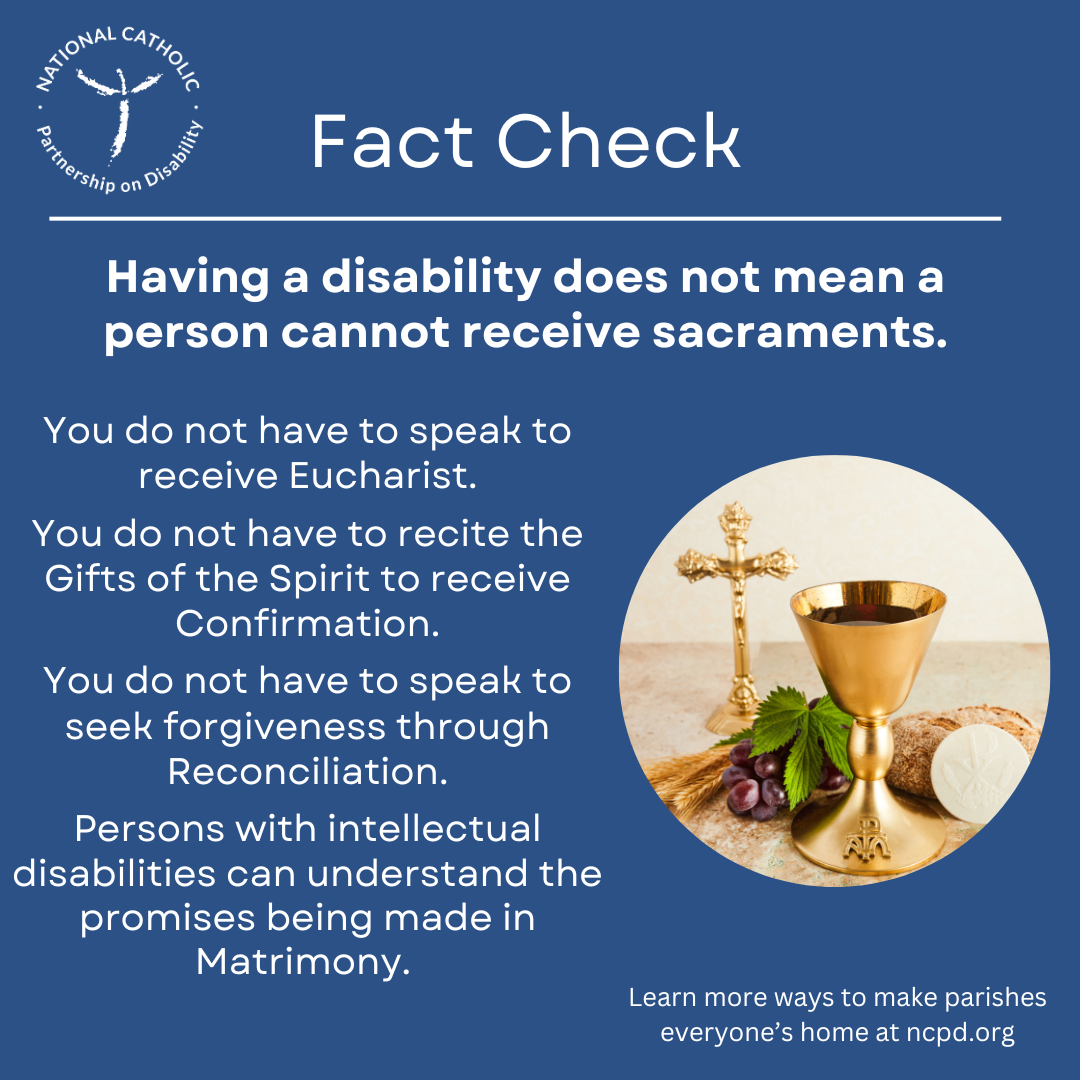
Having a disability does not mean a person cannot receive sacraments.

Any image shared electronically must have alt text. Suggested alt text for this image is below.

Short description: Having a disability does not mean a person cannot receive sacraments.

Long description: Having a disability does not mean a person cannot receive sacraments. You do not have to speak to receive Eucharist, recite Gifts of the Spirit to receive Confirmation, or speak to seek forgiveness through Reconciliation. Persons with intellectual disabilities can understand the promises made in Matrimony.

PDF icon disability and sacrament fact check.pdf
Related Disability or Ministry: 
Autism Spectrum Disorder, Blind/Vision loss, Deafness / Hearing Loss, Intellectual and Developmental Disabilities (IDD), Mental Illness, Physical Disability
Program Type: 
Catechesis, Diocese/ Parishes, Diocese/ Parishes - What to Do for Disability Ministry, Family / Caregiver Support, Sacramental Prep
Resource Type: 
Bulletin Articles, Disability Education
Language of resource: 
English
Tags: 
Infographic
NCPD Logo

National Catholic
Partnership on Disability

Advancing the Meaningful Participation
of Persons with Disabilities in Church and Society

Contact us: 415 Michigan Avenue, N.E., Suite 95
Washington, D.C. 20017-4501; ncpd@ncpd.org; (771) 203-4477

NCPD is a 501(c)(3) tax exempt nonprofit corporation.
EIN: 52-1262317

Copyright © NCPD - National Catholic Partnership on Disability | Website: CEDC